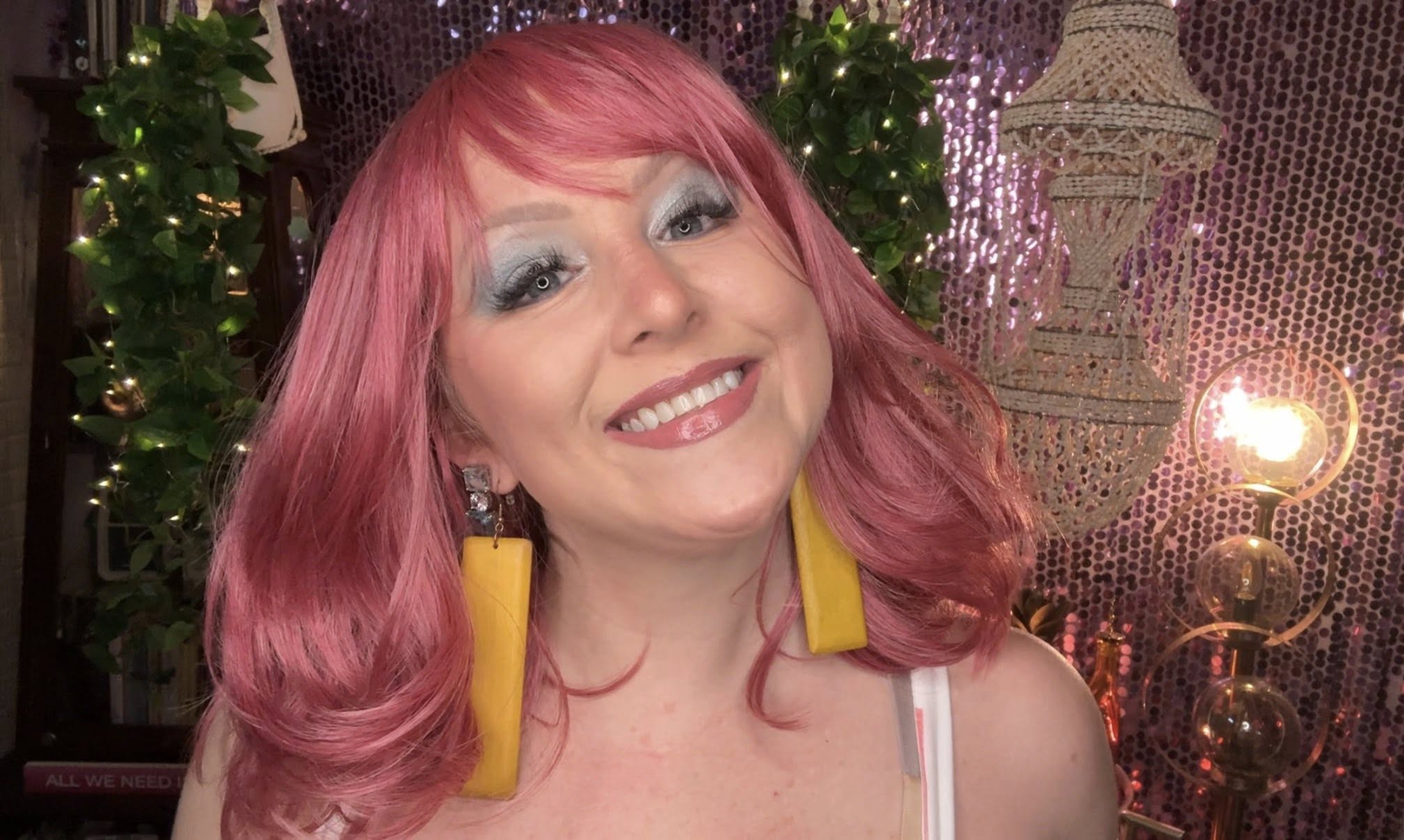
I Rock My Scars because I refuse to let the hard parts of my experience go to waste. I have always believed that our scars aren’t just a reminder of what we’ve survived; They are maps for anyone else who feels lost in the same woods. By sharing the fears, the hurdles, and the trials, my goal is to ease the pain, isolation, and fear of the individuals walking this path. We don’t have to suffer in silence.
I have always been a risk-taker. It’s a trait that has defined my life—from being the three-year-old kid launching myself off the high dive, to packing up and moving across the country after college without knowing a single soul.
When stage two breast cancer entered the picture, I treated my survival the exact same way: I assessed the risks, and I went all in. I didn’t just passively accept a standard treatment plan. I became my own fiercest advocate and chose the aggressive route: A double mastectomy, reconstruction, 20 grueling rounds of chemo, and five years of Tamoxifen.
When I learned about the Breast Cancer Index (BCI) test in my fourth year of treatment, I pushed my medical team to run it. The results revealed an 8.3 out of 10, indicating a dangerously high risk for recurrence. That score locked me into an additional five years of Tamoxifen. Was I aware that this medication came with its own risks, including a thickened uterine lining, polyps, and an increased risk of endometrial cancer? Yes. I am profoundly aware of the heavy trials and tribulations faced by the stage IV community, and in the brutal math of cancer survivorship, metastasis is always the least desired outcome. I made a calculated, data-driven decision to endure the long-term side effects in exchange for my life. But I am learning that immense gratitude for my survival does not require me to suffer in silence. This is simply put, my reality of survivorship.
When the end of my treatment tunnel was finally in sight in May of 2025, I experienced over 20 days of severe, consistent bleeding, forcing me off of Tamoxifen just two months shy of the 10-year finish line. A subsequent D&C revealed the culprit: A uterine polyp.
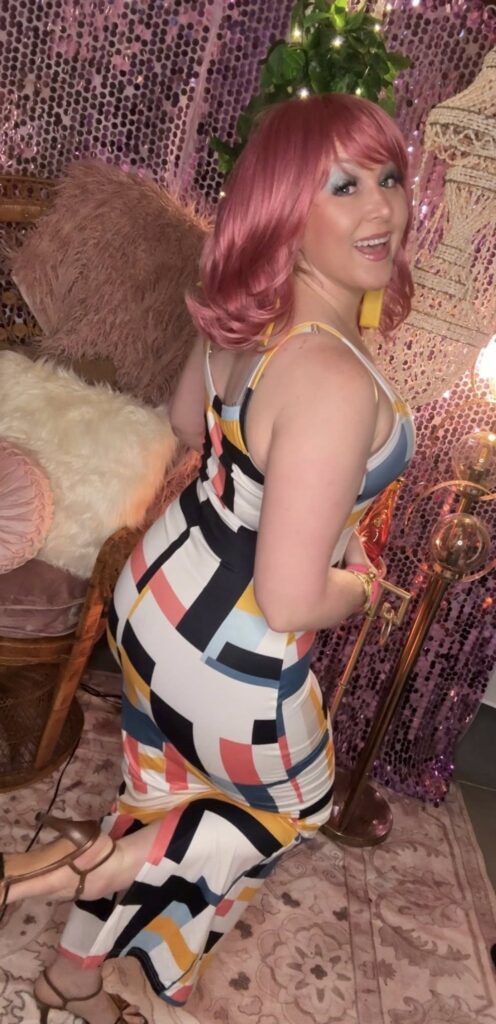
Having survived all of that, I decided to take a much more mundane risk this past Memorial Day weekend: I wore a perfectly planned white dress to a breast cancer benefit. I was ready to celebrate life in a room full of strangers, feeling confident, radiant, and alive.
Instead, my body pulled a massive bait-and-switch, and I ended up in an entirely different room full of strangers: The emergency room.
The severe bleeding returned with a vengeance. Two ultrasounds and two pelvic exams later, the medical team confirmed another polyp had formed. I was sent home with tranexamic acid, a wonder drug that acts as a temporary chemical dam to stop the hemorrhaging.
(Pro-tip from the trenches: Blood comes out of clothing with hydrogen peroxide. You’re welcome!)
As an 11-year survivor, the hospital environment is deeply familiar. You learn the language of triage, the cadence of the monitors, and the cold reality of waiting. “Right arm only.” “Pain is at a 7.” “Yes, I’d love a warm blanket!” These are the greatest hits in the discography of the chronic patient.
We often think that once we hit that final 10-year milestone mark, we get to drop the mic and walk away. But survivorship isn’t a straight line. Sometimes, it looks like your anatomy going rogue, brought on by the very medications that kept you alive.
Today, I am navigating the frustrating reality of medical gatekeeping. Despite the severity of the weekend, my OB/GYN is completely unfazed, telling me to “wait and see” until they can fit me in on June 18th. I feel like I’ve been in “wait and see” land since May of last year.
On May 28th, 2026, the goalpost moved again.
I sat in my oncologist’s office, exhausted and depleted, asking for a steroid to just get my energy back. He denied the steroid to protect me from the harsh withdrawal, but he gave me something much heavier:
He officially recommended a D&C and a hysterectomy. He even notated my file for insurance purposes so the path is cleared.
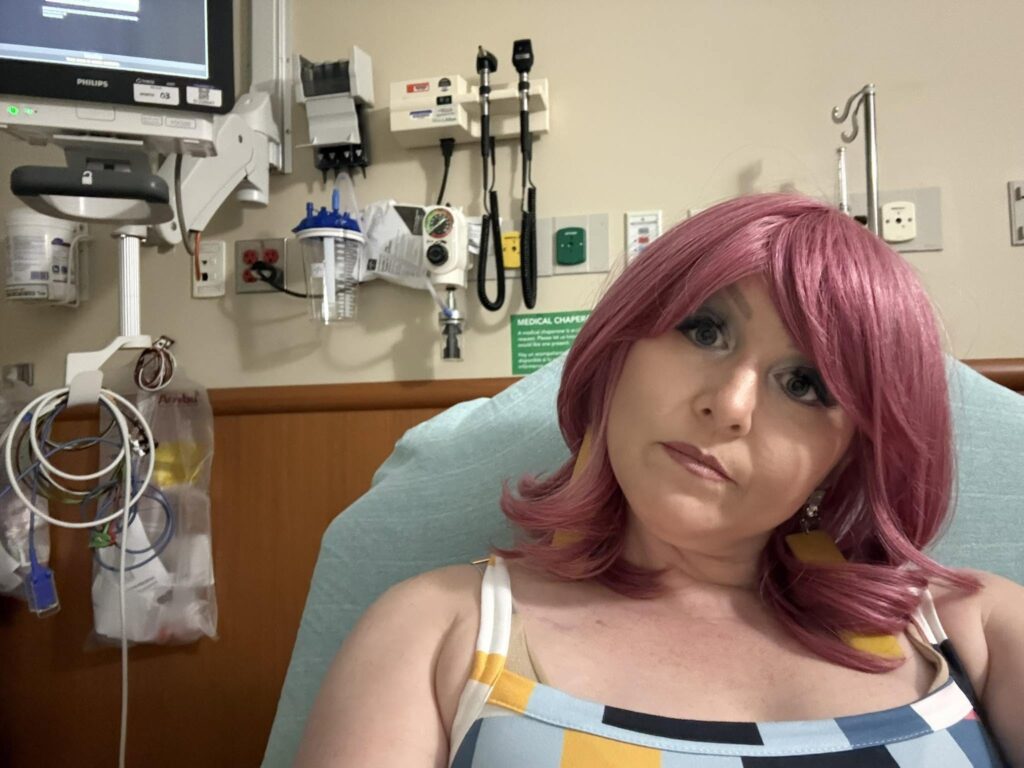
I should feel relieved that a doctor is finally taking this seriously enough to evict the problem. But to be completely transparent? I am terrified.
I have been pushing for a resolution, but now that the word “hysterectomy” is officially on the table, I am forced to face my very real fears. How is removing this organ going to adversely affect my sex life? Will my body respond differently? Am I going to lose a part of myself that I fought so hard to keep?
And then there is the reality of the physical toll: A hysterectomy means another 6 to 8 weeks of recovery. Another two months of being sidelined, exhausted, and healing from yet another major surgery.
I am profoundly disappointed.
It feels exactly the same way I felt when I first found out breast cancer was a five-year process. And then the exact same way I felt when the goalpost was moved, and I found out it was a ten-year process. It’s this suffocating feeling that I cannot escape.
There is a specific, heavy exhaustion that comes with being a chronic patient. It makes me deeply angry at the people who have looked at me over the years and thought I was being overly dramatic about my situation. They don’t understand the physical and mental toll of a finish line that perpetually vanishes right as you reach out to cross it.
I don’t want to write a neat conclusion today. I don’t want to find the silver lining or package this up with a beautiful bow of resilience. I don’t want to be ill. I just want to be healthy.
I want to know what it feels like to just exist in my body without waiting for the next check-engine light to come on, or the next surgery to schedule. And until June 18th, I have to figure out how to sit in the uncomfortable reality of this unwritten ending The hardest part for this risk-taker is the waiting.
About the Author
Kelsey Smith is a stage two breast cancer survivor, diagnosed with Invasive Ductal Carcinoma ER+/PR+ HER2- in 2014 at age 29. A passionate breast cancer advocate since 2017, Kelsey serves as a board member for I Rock My Scars and Ribbons of Monroe, and is the owner of the boutique marketing firm Sey Your Vision. She is dedicated to shifting the narrative around survivorship and creating space for raw, honest patient advocacy.
Want to connect? Reach out to Kelsey at Kelsey.Smith@irockmyscars.org to share your own story, ask questions, or simply say hello!
No responses yet